What to Look for in an ERW Pipe Supplier Before You Place Your First Order
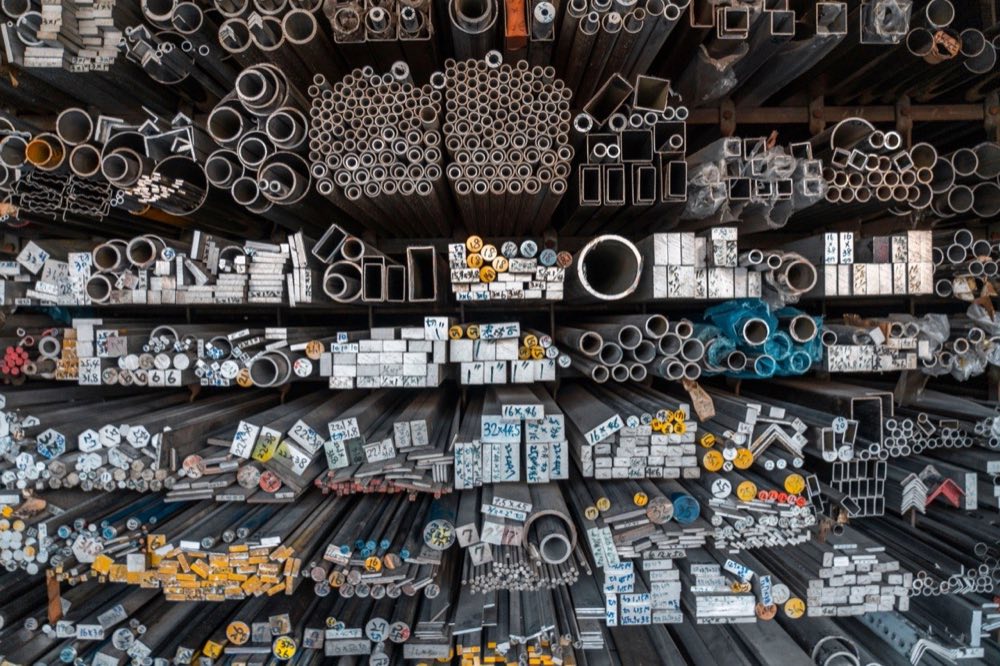
Finding a supplier for ERW pipe isn’t difficult. There are dozens of options at any given time, ranging from large distributors with extensive inventory to smaller trading companies that source on demand. The harder part is figuring out which ones are actually worth working with before you’ve had a chance to see how they perform.
Here’s what I look at when evaluating a new ERW pipe supplier — the specific things that separate reliable sources from ones that will create problems down the line.
Certifications That Match Your Application
Start with certifications, but be specific about which ones matter for your use case.
ASTM A53 is the baseline for general service ERW pipe — structural applications, low-pressure lines, mechanical and pressure service within its rated parameters. API 5L covers pipeline service and has more stringent requirements around chemical composition, mechanical properties, and testing. If you’re buying for process piping under ASME B31.3, you want to confirm the supplier’s product meets that standard’s material requirements.
A supplier who lists a long string of certifications on their website isn’t necessarily better than one with fewer if those certifications don’t match your application. What matters is whether they can supply pipe that meets the specific standard your project calls for and provide documentation proving it.
Ask: “Can you supply A53 Grade B ERW with hydrostatic test documentation and full heat traceability?” The answer — and how quickly and clearly they give it — tells you a lot.
Mill Certificates as Standard Practice, Not on Request
This one matters more than it might seem.
Some suppliers treat mill test reports as something they provide when asked, after some back-and-forth. That tells you documentation is an afterthought in their process rather than a standard part of how they do business.
A good ERW Pipe Supplier provides MTRs automatically with every shipment. The certificates should show actual heat chemistry results and mechanical test data, traceable to the specific heat number marked on the pipe. If the numbers on the pipe and the certificate don’t match, or if the supplier can’t tell you who issued the original test report, treat that as a serious flag.
Ask before you order: “Do you provide mill certificates automatically with every shipment?” If the answer is anything other than yes, ask why.
On-Hand Inventory in Your Size Range
Lead time is partly a function of market conditions and partly a function of whether your supplier actually stocks what you need.
A supplier who holds significant on-hand inventory in your common sizes can ship quickly and is less exposed to supply chain disruptions. A supplier who sources on demand will have more variable lead times and less ability to commit to specific delivery dates.
For recurring purchases, ask about their typical stock levels in the sizes and schedules you buy most. Ask what happens to lead time when stock runs out — do they have a primary mill relationship that ensures consistent resupply, or are they shopping the market each time?
This matters most during periods of tight supply. A supplier with real inventory depth can keep your project moving when others can’t.
Clear Policy on Substitutions
Substitution without notification — sending Schedule 40 when you ordered Schedule 80, or a different grade than specified — is one of the most disruptive things a supplier can do and one of the easiest problems to prevent with a clear policy upfront.
Before placing a first order, ask directly: “If you don’t have exactly what I’ve ordered in stock, what’s your process?” The right answer involves contacting you before shipping, explaining the situation, and waiting for your approval before making any change.
A supplier who says substitutions are standard practice “when the spec is close enough” is telling you they think their logistics convenience is more important than your project requirements. That’s not a supplier to build a relationship with.
Responsive Technical Contact
ERW pipe questions aren’t always simple. Application suitability, weld seam orientation requirements, code compliance, dimensional tolerances — these are questions that benefit from talking to someone who understands the product rather than a sales rep reading from a spec sheet.
When you first contact a supplier, pay attention to whether you can get a technically informed person on the phone or by email without significant friction. Ask a specific technical question — something about weld seam testing frequency, or the difference between Type E and Type S under A53 — and see how the response comes back.
A supplier who can engage with real product questions has people who know what they’re selling. One whose responses are generic or who has to route every technical question through a process before you get an answer may be thin on actual product knowledge.
References From Similar Applications
Before a first large order, ask for two or three references from customers buying similar product for similar applications. Not general references — specifically customers who buy ERW pipe in comparable sizes and standards to what you’re purchasing.
When you contact those references, ask about on-time delivery consistency, documentation quality, and how the supplier handled any problems that came up. A supplier who’s delivered reliably for other customers in similar situations is a much safer bet than one whose references are in unrelated product categories or who can’t provide references at all.
The goal of this evaluation isn’t to find a perfect supplier — those don’t exist. It’s to find one where the fundamentals are solid enough that the relationship can survive the inevitable complications that come up in industrial procurement. A supplier who handles documentation well, communicates proactively, and has real inventory depth will get through those complications without derailing your project. That’s what you’re actually screening for.